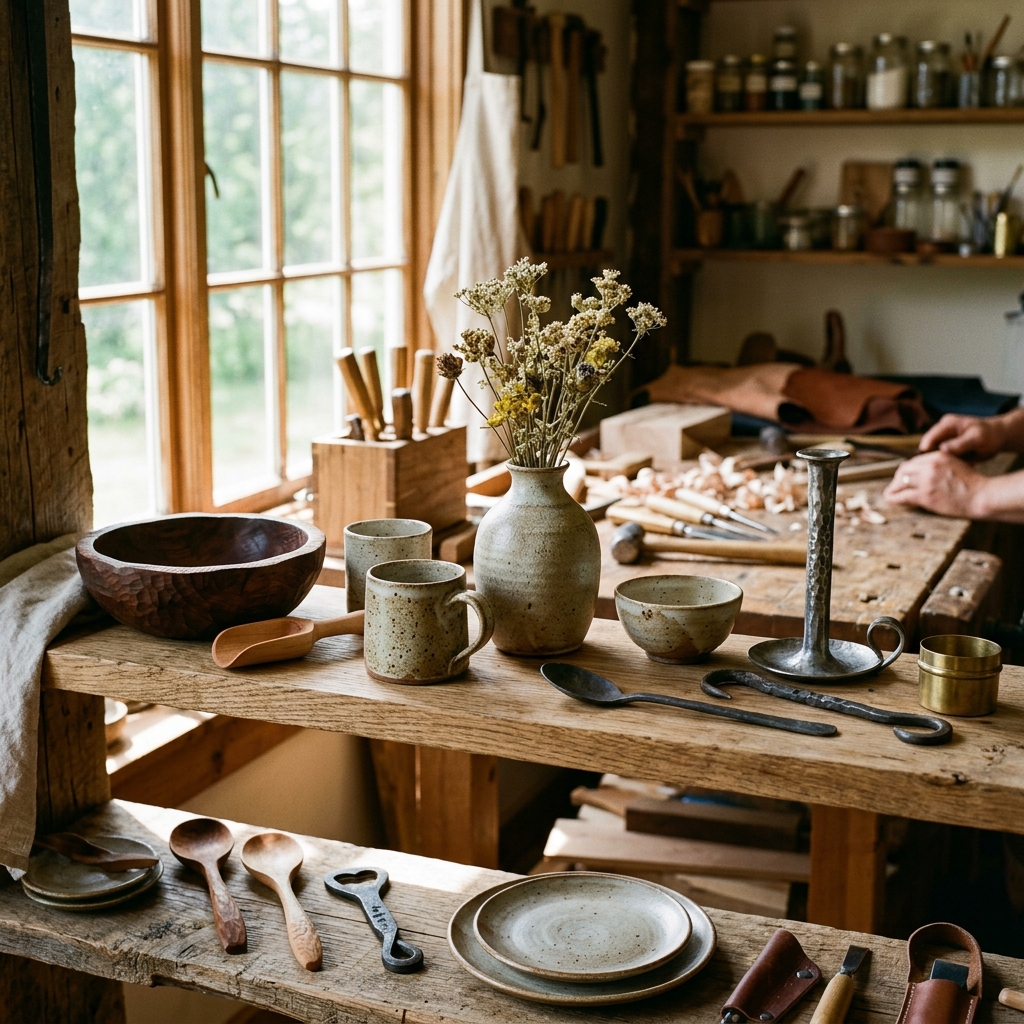
Handmade pottery is one of the oldest crafts known to humanity, dating back thousands of years. In today's fast-paced world, where mass production dominates, the art of creating pottery by hand remains a testament to human creativity and skill.
The History of Pottery
Pottery making has been an integral part of human civilization for over 10,000 years. From the Jomon period in Japan to the Indus Valley Civilization, the techniques have been passed down through generations, each adding their unique touch while preserving the core traditions.
The 7 Stages of Traditional Pottery
1. Wedging (The Preparation)
Before the clay even touches the wheel, it must be 'wedged'. This is a process similar to kneading dough, where the potter forcefully works the clay to remove air bubbles and ensure a consistent moisture level. An air bubble during firing is a potter's worst enemy, as it can cause the piece to explode in the kiln.
2. Centering (The Foundation)
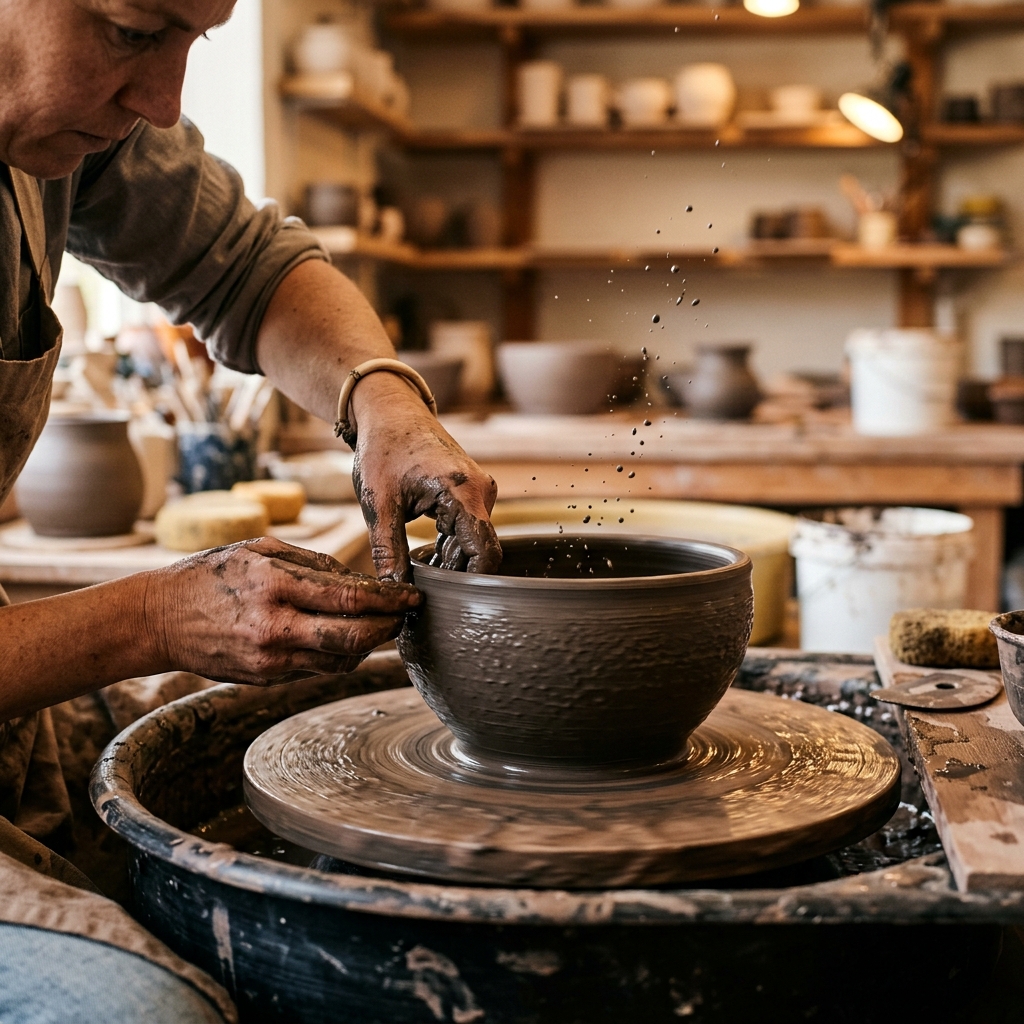
On the spinning potter's wheel, the clay must be 'centered'. This requires immense physical strength and focus. The potter uses their body weight to push the clay into the exact center of the wheel. If the foundation isn't perfect, the entire piece will eventually wobble and collapse.
3. Opening & Pulling
Once centered, the potter creates an opening in the middle and begins 'pulling' the walls upward. This is where the magic happens—a lump of earth transforms into a vessel. The thickness of the walls must be consistent to survive the extreme temperatures of the kiln.
4. Trimming & Refining
After the piece has dried to a 'leather-hard' state, it's returned to the wheel for trimming. The potter uses sharp tools to shave off excess clay, refine the shape, and carve a 'foot' at the bottom of the vessel.
5. Bisque Firing
The first trip to the kiln is called the bisque fire. The piece is slowly heated to roughly 1900°F (1000°C), which chemically changes the clay into ceramic while keeping it porous enough to absorb glaze.
6. Glazing
This is the stage where the artisan adds color and waterproofing. Glazes are made from minerals and oxides that melt during firing. Modern artisans often mix their own secret glaze recipes to achieve unique textures and depth of color.
7. The Final Firing
The glazed piece undergoes a second, much hotter firing. In high-fire stoneware, temperatures can reach 2350°F (1300°C). This process vitrifies the clay, making it as dense and durable as stone.
Caring for Your Handmade Pottery
Handmade ceramics are more than just functional items; they are pieces of art. To ensure their longevity: * **Thermal Shock**: Avoid moving pieces directly from a freezer to a hot oven. * **Dishwashing**: While most stoneware is dishwasher safe, handwashing with a mild detergent is always gentler on unique glazes. * **Appreciate the Singularity**: Remember that slight variations in color or shape are not flaws, but the 'fingerprint' of the artisan who made it.